
Plenty of parents first hear the word “myopia” after a school vision screening or a note from a teacher. It sounds clinical. It’s also one of the most common vision conditions our optometry team sees in kids.
Myopia, also called nearsightedness, happens when your child’s eye grows a little too long, so faraway objects look blurry while close-up objects stay clear. Once you know how it works, it’s easier to talk through myopia management with your child’s optometrist and decide what fits your family.
How Myopia Affects Your Child’s Eyes
Picture the eye as a small ball. When it grows longer from front to back, incoming light focuses just in front of the retina, which is the light-sensitive layer at the back of the eye.
That’s why your child can read a picture book with no trouble and still squint at the TV from the couch.
Your child didn’t do anything to cause this. Eyes grow along with the rest of the body, and sometimes they grow past the length that keeps distance vision in focus. Because kids are still growing, myopia can get worse over time until their eyes stop developing, usually in early adulthood.
How to Explain Myopia to Your Child
Kids tend to understand myopia better when you compare it to something they already know. Try a camera. When the lens isn’t focused, the picture looks blurry, and adjusting it makes everything clear again.
Glasses do the same job for their eyes. You might say, “Your eyes are great at seeing close-up things, so we’re giving the far-away stuff a little help.”
Keep the conversation light. Plenty of kids get excited about glasses once they get to pick out their own frames.
Signs of Myopia in Kids
Kids rarely tell you their vision is blurry, since they assume everyone sees the world the same way. You’re more likely to notice changes in how they act at home or hear about them from a teacher. Watch for a few of these signs:
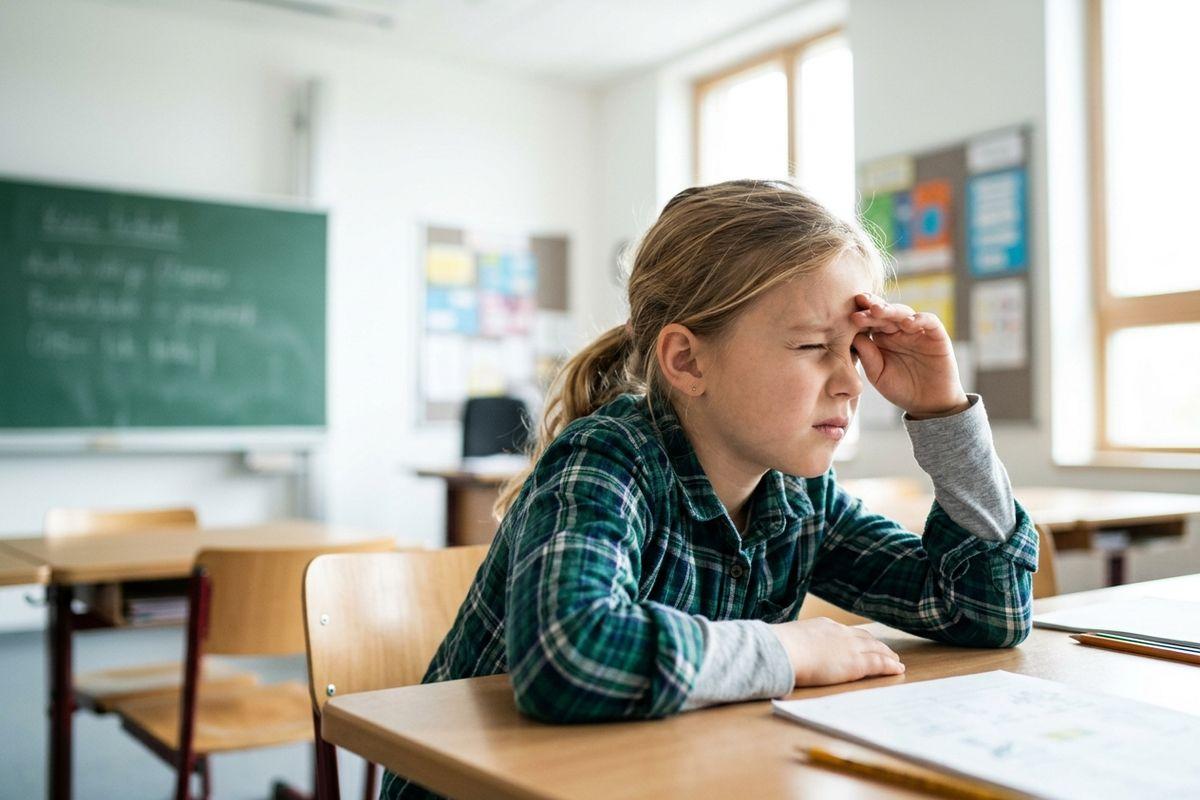
- Squinting to see the board, the TV, or road signs
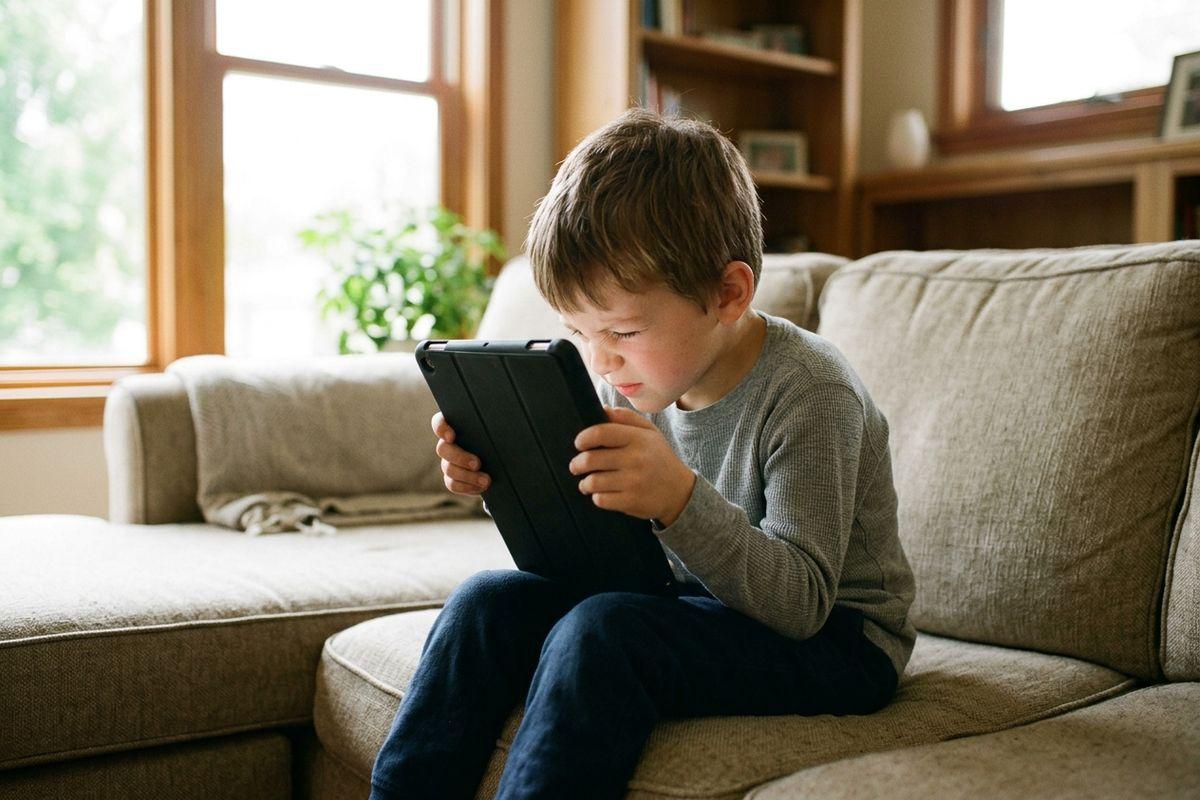
- Sitting very close to screens
- Holding books close to their face
- Headaches after school or homework
- Rubbing their eyes often
Some kids also lose interest in sports or activities that require them to look far away. They may not know why they’re struggling, so they just avoid it.
Myopia commonly appears between ages 5 and 14, right when school brings more reading and screen time. Prescriptions can also change during growth spurts, so glasses that worked well in 3rd grade may feel too weak by 4th.
Why Kids Become Nearsighted
Family history plays a big role. If you or your partner wear glasses for distance, your child is more likely to need them too.
Daily habits can contribute as well. Long stretches of close-up work, like homework or scrolling on a phone, keep the eyes focused at one short distance for hours at a time.
Less time outdoors may also add to the risk. Many kids spend far less time outside than earlier generations did, and their eyes miss out on the daylight and open space that come with it.
Myopia Management Options for Your Child
Your optometrist can recommend a few different approaches depending on your child’s needs. Glasses are a common starting point. They can sharpen distance vision right away, so your child can read the board and follow the ball at recess.
Glasses correct vision, but they don’t change how fast the eye keeps growing. So along with them, your optometrist may bring up options designed to help slow how quickly myopia progresses:
- Daily contact lenses made for myopia control
- Specialty eyeglass lens designs
- Low-dose atropine eye drops
Why Does Slowing Myopia Down Matter?
Higher levels of myopia later in life can raise the risk of other eye conditions, like retinal detachment and glaucoma.
The right option depends on your child’s age and daily routine. At each visit, your optometrist can measure how much the prescription has changed and talk through which choice works with your family’s schedule and your child’s comfort with lens care.
Daily Habits That Can Support Your Child’s Vision
Small routines at home can support the care your child gets in the exam room. Aim for about 2 hours of outdoor play a day, since time outside may help give the eyes a break from close work. A trip to the park or a bike ride after dinner both count.
During homework and screen time, teach your child the 20-20-20 rule. Every 20 minutes, have them look at something 20 feet away for 20 seconds. A kitchen timer or a phone reminder can make it easier to remember.
Encourage them to hold books and tablets at a comfortable distance, not right up to their nose. Good lighting at the homework table can help, too. And don’t rely on school screenings alone. Screenings check a few basics, while a comprehensive eye exam with an optometrist looks at how your child’s eyes focus, work together, and change from year to year.
Helping Your Child See Clearly at School and Play
A myopia diagnosis can feel like a lot to take in at first. With regular checkups and a plan that suits your family, you can help your child keep up in class and enjoy the activities they love.
We’re here to answer your questions and make each visit comfortable for your child. Book an eye exam with our team at ProVision, and we’ll check your child’s eyes and walk you through the next steps together.